So Very True

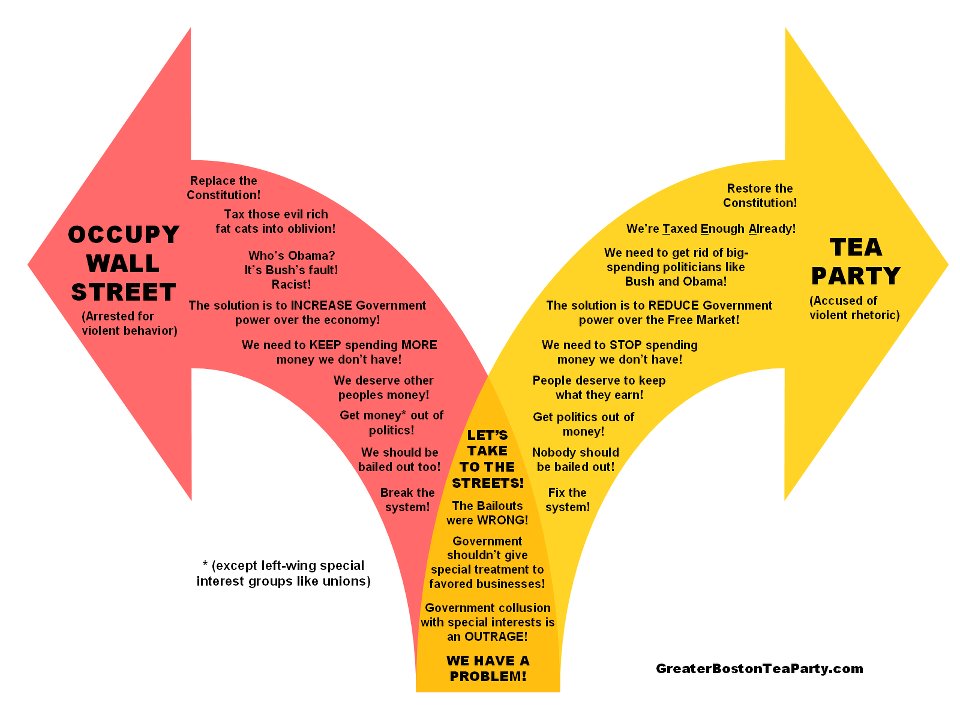
If I could find a graphic that so very correctly illustrated the different philosophies of the American left and American right these days, it would be this. The intersection here is in libertarian philosophy, if only we could have a candidate emerge that wasn’t about catering to one snake pit versus the other:

UPDATE: I should clarify, I don’t think the Tea Party is so libertarian, in general, as this graphic illustrates. What it suggests is that there are unifying principles that could be at work here. But both fringes are looking at ways to use these phenomenas to pit the “right” side against the “wrong.” I’ve always wondered if there are compromises that could be had that don’t fit into any of the generally recognized political structures, but would work better than what we have now.

Is Rohrer Really the Best GOP (Potential) Candidate Against Casey?

I disagree with Sebastian that Sam Rohrer’s potential entry into the Senate race against Bob Casey makes him the best candidate the GOP has to run. My issues with him all center around his ability to run a viable statewide campaign. We had a preview of his attempts in the gubernatorial race last year, and I think his decisions proved that he doesn’t know how to prioritize how to spend money or turn out the actual votes needed to win. Some of this is rehashed from previous comments around the blog and emails with readers.

Why Sam Shouldn’t Run
His primary campaign proved that he wasn’t capable of running in a serious statewide race. Considering a race against Casey would be even tougher than a primary against Corbett, I think these issues are even more important to consider. His campaign did a lot of local events that often turned out 50-200 people. That normally sounds like a great grassroots campaign strategy. In some ways, it can get voters talking to their friends and neighbors more than a larger typical political rally. But what many campaign observers noticed is that he kept talking to the same groups over and over. He never branched out beyond typical Tea Party-type events. In politics, you have to build a coalition of voters to win. In a purple state that will see a strong influx of Democratic money for the presidential election, the Tea Party support won’t cut it. It won’t even come close. Without solid existing relationships with a variety of coalition groups, he may not even pull together quite a bit of the traditional Republican vote. If he could not or would not reach out to the coalitions during a GOP primary, we can’t trust that he’ll try to reach them or independents in 2012.

The other big red flag for Sam Rohrer is how he prioritized his spending during the last race. His gubernatorial fundraising account had a whooping $272.25 left in it. (This statement was true at the time I wrote the original comment in winter of 2010.) Oh, and that’s only if he decides to ignore the $10,000 loan he made to his own campaign that is still outstanding. Considering the average cost to win a Senate seat in 2010 was $8.28 million (and down ticket races will be competing with presidential candidates in 2012 for airtime expenses), starting off $9,727.75 in the hole isn’t exactly the best place to be a little over a year out from the primary.

Rohrer didn’t have a lot of money to work with, so he really needed to use it wisely. Instead, he paid Aaron Tippin $10,000. A concert? Really? Three days before an election it’s time to get out the vote, not goof off in Harrisburg. He paid $2,000 directly to Joe the Plumber for his support. (There’s an additional listing for his services combined with some robocalls for $17,429. It’s not clear just how much of that went to Joe the Plumber.) Joe the Plumber’s 15 minutes were up by then, and he certainly doesn’t have any serious connections to groups of voters in Pennsylvania.

Unfortunately, Rohrer’s campaign tried to rely on political stunts to get media coverage. That’s no way to run a statewide campaign, something I think is accurately reflected in the results of the election (more than 2-1 loss). The other issue that Rohrer has working against him are his own supporters. I realize that’s not his fault, but some of them have left a very bad impression with other coalition groups. Many took that attitude that if their guy didn’t win, they would take their ball back home and sit out completely. That’s not the way to build a serious coalition to support your current or future favored candidates.

If Rohrer could learn to raise money in a heartbeat, teach his most vocal supporters how to play well with others so they can successfully recruit into the cause, make an effort to actually reach out to non-Tea Party groups, and demonstrate he’s learned how to effectively spend money on getting out the vote, then he could have potential. I don’t think he’s done that in the last year.

Who is the Best GOP Candidate?
Let me just say that I don’t know if there’s a fantastic candidate who will absolutely have a great chance against Casey. Bob Casey has made his reputation by avoiding the spotlight and hoping people think he is his father. Consider that Pat Toomey just barely squeaked out a win in 2010, and that was against a far left liberal. Casey has the perception of being a moderate. Hell, he barely has the perception of having a pulse, so he’s hardly making waves with people in a negative way. Not to mention, Joe Sestak had a nice & dirty primary before his general campaign against Toomey. We won’t have that to bring down Casey’s reputation in 2012.

There’s at least one candidate who already has a bit of a federal profile & fundraising network. Tim Burns launched a campaign against John Murtha and ended up having to run in both a special election and a general against a replacement candidate who had all of the contacts without all of the personal baggage and negative name recognition of Murtha. Even with the special circumstances, Burns managed to pull off 45% of the vote in the special and 49% of the vote in the general election. Considering how much of the district’s economy depended on the pork that only Murtha and his staff (his successor Mark Critz was his Chief of Staff) could deliver, it’s amazing that Burns managed to perform so well in a time of economic uncertainty. Because it started as a campaign against Murtha, it means that Burns could tap into nationwide fundraising resources for that campaign. He presumably still has that kind of reach.

Another candidate with serious potential, but less of a track record in the campaign department, is Steve Welch from the Philly suburbs. He was in the race for Congress until Pat Meehan bumped him out. Then, he was recruited to run in the neighboring district since the next district is nearby and incumbent Rep. Gerlach was leaving the seat to run for governor – until Gerlach changed his mind and essentially booted Welch from the race. The fact that so many Republicans in the area want him to run to represent them speaks well of him, and he has recruited a campaign team with experience running successful statewide races with strong independent support. He’s wealthy, so that also gives him a head start in the fundraising game.

Those are just my two cents about the current crop of serious potential candidates.

Cain Accusations Show Why Beginners Have it Rough

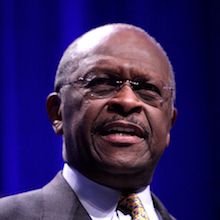
A lot of people seem to like Herman Cain. Given that the GOP field is a choice between Romney, who’s bonafides on the Second Amendment and health care are not to be trusted, and Rick Perry, who is increasingly looking like a candidate who doesn’t have the chops to operate on the national level, Cain seems like he could be a refreshing alternative.

But it was almost predictable that he’d have a “public hair on the coke can” moment. Not only because of the fact that the quickest way to politically lynch a conservative black man is to drag forth the old racist stereotype that the black man can’t control his libido, but also because the guy is a political neophyte who has never really been vetted in a serious way before. Unlike Perry and Romney, Cain has never held any elected office. He’s been involved in politics, but generally as a behind the scenes operator. He has never put a target on his back until he became the GOP frontrunner, and now everything that could ever possibly come out about him is going to come out.

Romney and Perry have the advantage of having attained a governorship, with Romney having done that in a state which is heavily Democratic. Generally speaking, to attain an office like this, you have to work your way up the political ladder. As you work your way up, you put a bigger and bigger target on your back. People have an incentive to dig. Any skeletons in your closet are going to come out, even if they are skeletons someone else put there. All the chickens from your past are going to come home to roost.

Mitt Romney comes from a political family, his father having been Governor of Michigan. This is an advantage to Romney because he would have been exposed to the rancorous nature of politics from an early age. Romney actually attained the governorship of Massachusetts as a relative newcomer to politics — his only experience prior to winning Governor was a failed challenge to Ted Kennedy’s seat in 1994. Nonetheless, this would have put a big enough target on his back for opponents to start digging. His successful gubernatorial run in a Democratic state certainly would have given opponents and the media an incentive to dig.

Rick Perry won his first election to the Texas House in 1984, ironically as a Democrat. After that, as a Republican, he ran for Agricultural Commissioner. From there he ran for Lieutenant Governor, and was elevated to Governor once George W. Bush assumed his role as President. Perry has only really ever faced a tough high-profile race once in his career, which was for Lieutenant Governor. I think his weaknesses as a candidate have been showing in his primary performance.

Cain has virtually no political experience. He has never held any elected office. All the accusations, whether true or not, are going to start coming out now. For the first time, he’s painted a big target on himself. Having run for political office before is certainly not a guarantee you won’t come under new allegations, after all it was Bill Clinton who had a team dedicated to dealing with “bimbo eruptions,” but having run for lower offices previously at least means some of the sources for allegations your opponents might know about have already been used up, and overcome. Herman Cain will have the disadvantage of having to deal with many of them now, rather than in prior races during his political career.

It’s a risk trying to win a national office with someone who has never even held a single elected office. Even Obama, despite his lack of real political experience, at least had the Chicago machine behind him. While I like many of Cain’s positions, have been disappointed in Perry, and harbor no real love for Mitt, I’m wary of pushing such a political neophyte as Cain onto center stage. It’s a huge gamble, and the stakes are unbelievably high for 2012. Our primary goal is to ensure Obama does not get a second term. For that I want the strongest candidate we can run. As much as I wish that could be Herman Cain, his lack of real experience on the political stage is a major issue I don’t think GOP primary voters should overlook.

Sam Rohrer Running Against Casey?

Sam RohrerI got this from Sam Rohrer via his e-mail list today:

Later this month, I will outline my next step in promoting constitutional principles and courageous leadership. It’s a road – like others we’ve traveled before- that will be difficult and with an uncertain destination.

And then there’s this article in MSNBC:

A former state representative who lost to Tom Corbett in last year’s Republican gubernatorial primary is planning to enter a crowded field of GOP candidates running for U.S. Senate.

I’ve always liked Sam Rohrer’s politics. He’s about as close as you can probably get to libertarian in this political climate. But Sam’s Achilles heel, which was shown in the race for Governor, is that he’s a bad fundraiser, and you need to be a good fundraiser to win elections. As much as I might wish this were about principle and restoring liberty, the vast majority of people who vote barely pay attention. As a candidate, you’re a product that is being sold (to voters), and to tell that product, you need to advertise. That costs money. Philadelphia is one of the most expensive media markets in the country, and our media market reaches a lot of GOP voters.

That said, we have no one that looks decent currently stepping up to run against Casey, and I’d be willing to give Rohrer a chance. Maybe with the entire GOP apparatus behind him, he can overcome his fundraising inadequacies. The Democrats will dump whatever money they can afford to hold that seat, however, so it’s not going to be an easy race, even if the GOP nominee were a seasoned politician with a statewide record. If Rohrer runs, he’ll be the king of underdogs. We’ll see what he’s made of.

FOP Backing Holder?

This makes me wonder what they were promised by the Administration in return for their support. Remember that a big component of FOP support for the Clinton Assault Weapons ban was because the crime bill that it was attached to contained funding to hire a hundred thousand more police officers. The FOP has been on our side more lately, but like other unions, it’s a mistake to believe their leadership can’t be bought. They certainly can be bought.

Different Organizations

John Richardson notes there’s at least one thing the ATF seems to do competently, which is handle C&R licenses. I also possess a C&R, and agree it’s a good way to enhance your collection with relatively minimal BS. You can also get pistols without going through any of the Pennsylvania paperwork (which means it ends up in the state police registry database). But there’s a reason for that. If you look at the top of your C&R, you will notice it says “Department of the Treasury” rather than “Department of Justice.” The same bill that established the Department of Homeland Security also split ATF in two, sending the enforcement side to Justice, and leaving the bean counting and licensing functions in Treasury. This effectively makes them two agencies, in fact if not in name. The people responsible for Fast and Furious were in DOJ.

A Guide to the Pennsylvania Texting Ban

Our state legislature has recently passed a texting ban, while driving. John Micek, author of the Capitol Ideas blog, has an article in the Morning Call outlining the conditions of the ban. Looks like the car has to actually be in motion, so you can still bang out a text at a stoplight, or sitting in halted traffic. This seems like a fair compromise to me. I’m against this ban, but more because it’s been shown that it does nothing to increase public safety (people just hide the phone they are texting on, taking their eyes further off the road), rather than because I think you can text while driving safely.

More on Searches

A commenter brought up an interesting point in regards to the search of Cemetery’s vehicle, from a lawyer who says the 4th Amendment is alive and well, and it’s still possible to win 4th Amendment cases:

Your real concern is that all other things being equal, police are going to be believed in court over citizens. Well, yea, and that’s always been true, and likely always will be. The advice to have your own camera rolling is well taken.

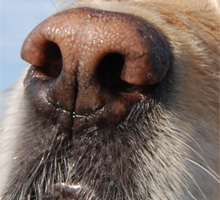
I think that is partly my concern. If I think about the issue a bit more, what I really think I have an issue with are the dogs. Don’t get me wrong, I have no issue with the use of dogs in police work, or even the use of dogs for their noses in police work. I do have an issue with dogs amounting to probable cause for a search. Let me explain.

It is conceivable that sometime soon, technology will allow us to replace the dog’s nose. In this instance, police will be able to circle your vehicle with a device that takes in air samples, and looks for signatures of contraband. The interesting thing about this technology is, I think it actually would enhance civil liberties. I can’t cross examine a dog to find out what was going through its mind when it “alerted.” I can demand the logs from the device, demand to see its service records, and examine the science behind its function.

Even if it ends up a matter of judicial notice that the devices are reliable, and a reading can amount to probable cause, the officer at least would have to induce a reading somehow if he wanted to act merely on his suspicion, rather than just read the tea leaves of a dog’s behavior.

What’s interesting about such a sniffing device is how it would be affected under Kyllo v. United States. Unless such a device was generally available, it’s hard for me to see how it would be distinguished from the Kyllo case, except that involved a residence, and this would only presumably involve a vehicle or personal effects such as luggage. Perhaps the court would rule you have a lesser expectation of privacy. But as it is, a dog sniff doesn’t even constitute a search for 4th Amendment purposes, but if I were to use a device the mimics a dog’s nose, it presumably would. This goes to show the court’s logic in this matter is not entirely consistent.

Cemetery Pulled Over. I’m Going to Guess DWJ.

Looks like Cemetery got pulled over near Nashville and got his car searched. I’m guessing, just a guess here, that his crime was DWJ, or Driving While Jersey. It matches my experience that cops in the South are a hell of a lot nicer and more polite while they are crapping all over your rights than they are up here.

The cops were right though, that you don’t need a warrant to bring a dog around the car, but the dog is just a front to get probable cause to do a search. The dog may have shown no objective interest, but had they found contraband, you can bet they would have testified the dog alerted, and would have pointed out to the court that it’s a highly trained dog. The dog could be about as good at finding dope as your neighbor’s Pekingese, but it’ll hold in court. It’s your word against theirs. Who do you think the judge or jury is going to believe?

Basically as long as the cops had a reasonable and articulable suspicion that a crime was being committed, which would generally only take following your average driver a few miles, you have a legal stop. Once you have the dog on the car, you have the pretext for a search no matter what the dog actually does. Basically if the cops want to search your car, you’re not going to stop them. The key is not consenting to a search. If the dog comes out, roll with it, just make it clear you don’t consent to the search. Not much else you can do. The 4th Amendment has been dead letter for a long time. All searches are reasonable. Long live the War on Drugs.

Occupy Philadelphia

A blogger colleague who works in the Comcast Center, the tallest building in Philadelphia, has some pics of the Occupy Philly protest trying to occupy the Comcast Center. What I really want to know is who the dude is walking that beam? And what is he accomplishing by being there? How did he get up there? It’s odd that in a picture of occupiers, I’m really floored by the guy with the high wire act.

The best part that Dave notes, “Oh, by the way, I asked my coworker and he said they smelled pretty bad.” Looks like mostly they will be occupying City Hall, which I’m pretty sure probably smells bad enough from the rats that infest that building on any given day. I doubt anyone will notice. But the Comcast Center is private property, and security appears to have acted quickly.

UPDATE: Apparently the high wire act is a statue. I guess that’s why it’s not moving.