What Publishing Permit Information Gets You

I’ve said before that no gun owner ever complained about permits being public record until newspapers decided to be bozos and publish lists of permit holders. If the Brady Campaign and MAIG were smart, they’d be the first on the phone to these papers telling them to knock it off. I would have no problem with papers iterating through the permits finding and reporting on people who legitimately should not have them. But that’s not what they do. That’s what we would call real reporting, and no newspaper has the money to do that these days.

But why should the Bradys be against publishing? Because that will create a backlash that will cause the law to change.

Thursday, a House committee voted 11-0 to keep information about gun permits from being released to the public — information The Indianapolis Star has used to document how guns have fallen into violent hands.

The NRA lobbyist for Indiana is Ashley Varner, mentioned in the article, who used to handle NRA’s media relations with bloggers when she was working in ILA’s Public Affairs office. A lot of us bloggers know her, so I think I can speak for us all when I say “Go get em Ashley!”

Well, At Least Now They Admit It

The Star Press is admitting that they are treating gun owners in Indiana like child molesters by publishing their permit information for people to search. The problem is they think this is how it should be, because those sex perverts could have gun permits, you know. Can you think of any offense that involves fondling children that doesn’t make one a prohibited person? I can’t.

Smart Marketing

I’ve been critical of NRA’s marketing before, but I’ve also offered suggestions. Today, it’s time for another suggestion.

We all know that periodically NRA offers discounted life memberships and life member upgrades. However, the portion of the membership to receive the offers often seems quite random. I’m sure there’s some equation they do to come up with their lists, but, regardless, not every one gets the offer. In addition, when some do get the offer, they just don’t see the benefit over annual membership. The discount is great if you actually plan on buying a life membership anyway. For those who never thought about it, the conversion rate is going to be greatly reduced.

So, how do you market to a) people who are more likely to take advantage of the buy-in, b) people who could find a “use” in being a life member, and c) get other NRA to do your pressure sales for you?

Taking a look at Sebastian’s gun club newsletter this morning, I see that roughly 10% of their club members have expiring NRA memberships coming due in the next few months. Since the club is a 100% club, there’s a vested interest by the members in keeping up their NRA memberships. Since the club checks everyone’s NRA membership, there’s a vested interest in leaders to minimize work. Haha, we’ve now found a group that meets all three needs above.

So for those of you in Fairfax reading, perhaps it’s time to update the Clubs & Associations databases, plead with membership to open their minds to new ideas, and offer clubs who recruit life members at discounted prices the chance to minimize their own paperwork. Frame it in terms of incentives. Crazy enough, it works as a pitch to most people. In fact, make the minimization of paperwork a theme and offer to create a special co-branded flyer for the clubs to send to their members either via email or snail mail. Bringing on even one new life member, even at a discounted rate, would more than cover the costs.

Now, if we really want to get crazy and look at the incentives for NRA to take a chance with a new marketing idea, they could look at doing this now so that they have more people on their lists for the 2010 elections. I know, it’s nuts!

Oh yeah, and I’ll use this post to put in a pitch that NRA should offer the life member discount their give to their own staff to the staff members of official state associations. They usually make far less than those in Fairfax do, have far fewer benefits (if any), and don’t get much in return. It would the decent thing to do to recognize the contributions those folks (however few right now) make to the cause.

Corzine Signs Bill Weakening His One-Gun-A-Month Election Scheme

When John Corzine thought that pushing gun control was the key to his re-election bid, there was nothing more important that the legislature could possibly do. Without fanfare, he signed the measure that makes the law slightly less of an abuse on the law abiding gun owners of New Jersey. I guess the theatrics don’t matter to him anymore now that he’s politically irrelevant.

We are the NRA

It would seem that someone in Tennessee finally figured out something important about the culture of the Second Amendment:

Legislators are often scorned for being afraid of the National Rifle Association and passing gun bills, quaking in fear of the special interest group. Most Tennessee legislators are not afraid of the NRA, they are the NRA. Most rural Democrats and most of the Republicans have been members of the NRA for decades. They feel exactly like the NRA lobbyists on most gun issues.

It’s amazing that it took this long for them to notice. How many candidates use their membership in stump speeches and materials? It’s fairly common and yet the press just now noticed? Observant ones, they are.

The easiest lobbying job in Nashville is the gun lobby. The only controversy on gun issues is an argument over who gets to sponsor which gun bill.

Somehow I doubt that. If it was really that easy, there would never be debate.

It is also argued that the last session of the Legislature was only about guns and gun bills. The last session of the Legislature passed more bills than any other in modern history. The gun bills got coverage, as they should have, but it doesn’t mean the regular work of the General Assembly did not proceed as usual. There are always one or two big issues that suck up the coverage and the vast majority of legislation passes unnoticed. That’s how we get blindsided with bills like the workman’s comp bill, which turned out to be such a disaster it will have to be dealt with in a special session.

This is not the fault of the people who cover the Legislature. They get limited minutes and inches to report on the doings of the day, and gun bills are going to get more play than workman’s comp.

You mean the press purposely sensationalizes coverage and ignores major legislative concerns? Shocking, I tell you.

Yes, it is true that it’s not actually the fault of people who cover legislative news that Tennessee’s lawmakers screwed something up. However, perhaps if those covering the legislature were more interested in the overall work of the legislature instead of only the sensational stories, more of these problems would be caught. There is no excuse for poor work on the matter, especially when the coverage of gun-related bills is often terrible to begin with.

Legitimately Unsure

If you’ve taken enough new shooters to the range, you’ll run across one who becomes less frightened/disturbed/bothered by firearms, but they still don’t quite get why people enjoy shooting.  It’s not that they have a bad time, they just don’t get as into it, and they are legitimately curious about people who do enjoy it.  What do you tell those people when they ask why you are a gun owner and shooter?

One LA Times columnist wants to know before she writes her next column.

Light Reading: Analysis of The Stevens Dissent

Dave Hardy has a law review article out examining the Stevens Dissent in DC v. Heller, here’s the intro:

DISTRICT OF COLUMBIA V. HELLER ESTABLISHED THAT THE Second Amendment’s right to arms existed as an individual right, with no requirement that the rights-holder be functioning as part of a well-regulated militia. While the majority opinion has been subjected to extensive review and commentary, the Steven dissent, joined by four members of the Court, has not. The dissent came within one vote of becoming the majority; it clearly merits close examination.

Had the dissent become law, the Court would have informed the American people, seventy percent of whom believed they had an individual right to arms, that their rights-consciousness was sadly mistaken. If done on the basis of sound research and reasoning, this would involve no more than the Court performing its duty. An examination of the dissent suggests, however, that the Court would have been taking this position based upon surprisingly thin reasoning and evidence.

Footnotes removed for purposes of quoting. I joke when I say light reading. It’s very in depth. I won’t have time to read it all until later, but it looks good.

Never Here

What two brothers are going to in order to get their permits approved for getting pistols before a ban goes into effect in Ireland.  Doesn’t look good. How would you like to find yourself having to do this?

“[IPSC’s] not in the Olympic arena?” the Inspector asked. “No,” the applicant replied.

“I’d like to say that the Superintendent might have had concerns at the level of security but that wasn’t being mentioned to us at any point,” he said.

His brother took to the stand and described a Glock pistol as a semi-automatic 9mm firearm which is used in competition.

He said the gun is “popular because it is reliable and cheap”. “Is it fair to say it is easy to conceal?” Inspector Ruane asked. “If you were wearing a trenchcoat it would be easy to conceal any gun.”

The Inspector told him he was engaging in semantics and put it to the applicant that a Glock pistol is “the weapon of choice to criminals in this jurisdiction.”

The applicant said he was entitled to a licence under that legislation in place in October, 2008. “You were entitled to be considered for the licensing of a firearm” Inspector Ruane clarified. The applicant agreed.

Yes, before a judge, being treated as if you might be a common criminal, just because you want a Glock to do IPSC competition. You might hide it under your trenchcoat, you know. It’s the “weapon of choice” for criminals. Where have we heard that before? Never here.

Webley Mark IV .38 S&W

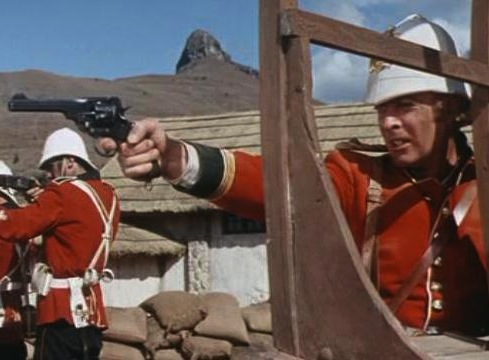
Many of us, when we think of Webley revolvers, think of this iconic movie image, of Michael Caine and Stanley Baker playing Lieutenant Gonville Bromhead and Lieutenant John Chard in the 1964 movie Zulu, firing away with their Webley Mark VI in .455 Webley. Unfortunately for the movie, the iconic image is wrong. The revolver in question wasn’t introduced until World War I, thirty six years after the British Army fought the Battle of Rorke’s Drift. Nonetheless, the movie helped introduce more than a few people to the Webley, including me. When I noticed Century was carrying some Webley Mark IVs in their catalog late last year, I decided to grab one, since I had just renewed my C&R FFL. Delivered to my door a few days later. These aren’t very collectible revolvers, which their low price reflects, but they are in good condition, and should be a solid shooter, and a good introduction to the gun. The pistols are in .38 S&W, which is an older, than the .38 Special, and definitely more anemic than the man stopping .455 Webley. Unlike the Smith & Wesson designs, the Webley uses a top break reloading mechanism, where the entire barrel and cylinder can be moved away from the frame. This requires two hands to accomplish, so offers some obvious disadvantages to the more modern designs, but its’ still neat.
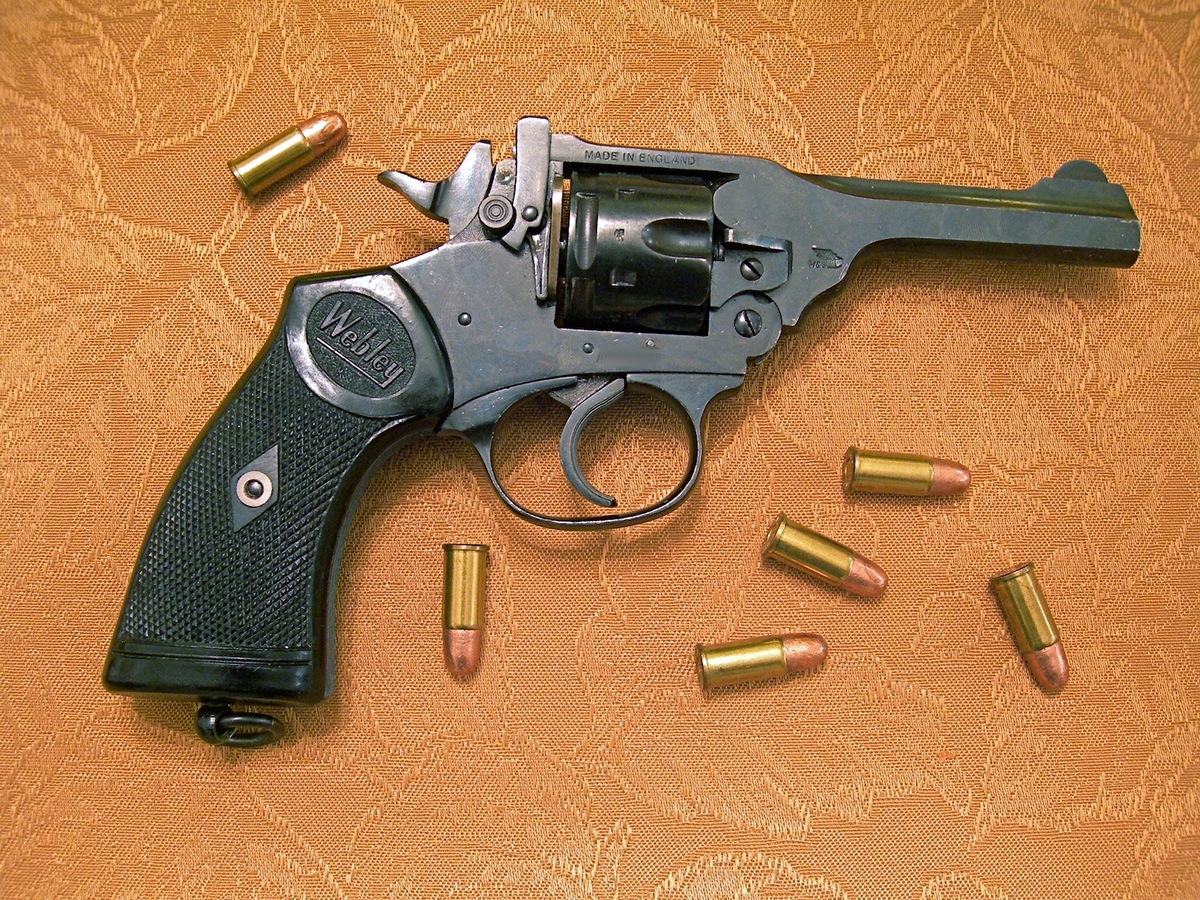
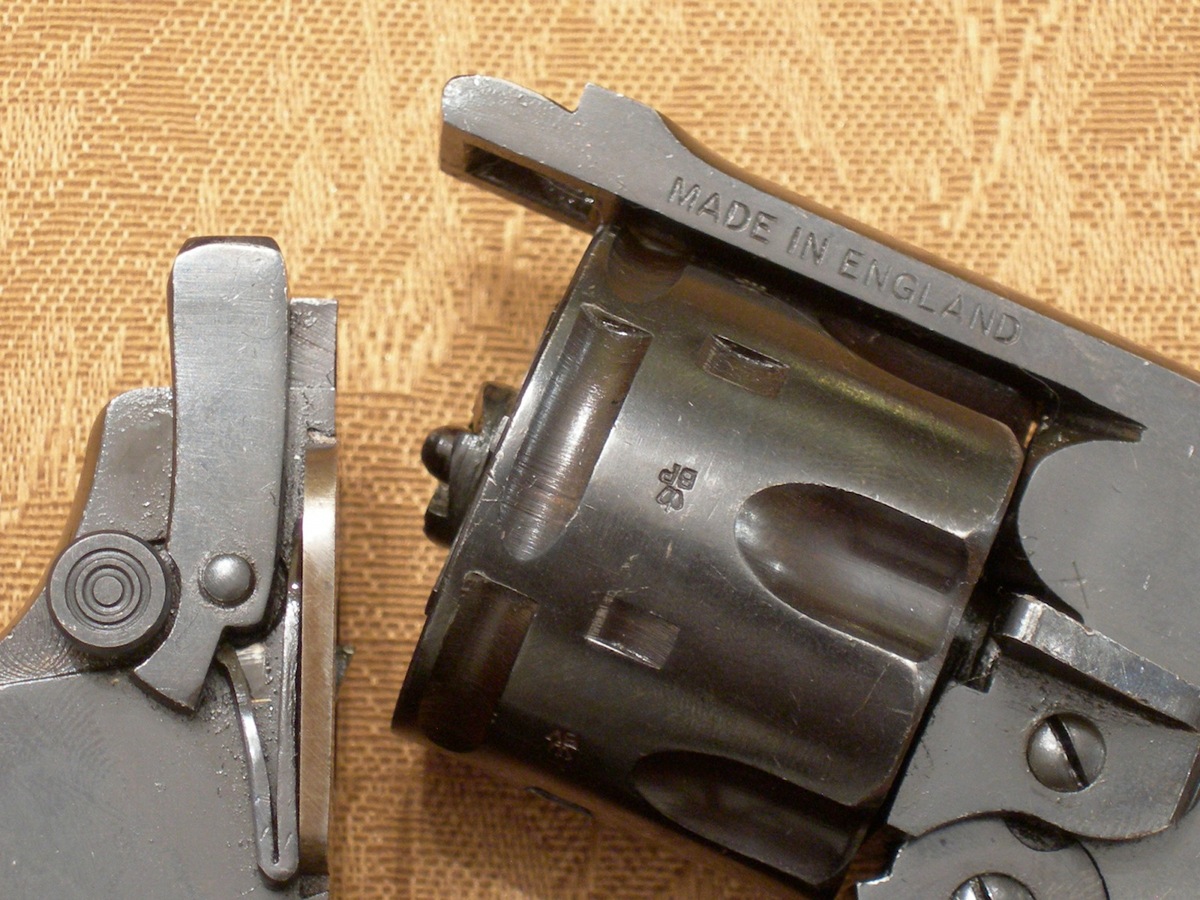
In the picture showing to the left, you can see the cross block safety that Century installed on these guns. That’s the main thing that kind of ruins these for collectors. Apparently it was done in order for Century to be able to import them under the ATF point system. Firearms explicitly listed on the C&R list can be imported by definition, without consideration to the point system (you can thank FOPA for that), but only the Webley Mark I is explicitly listed on the C&R list. These revolvers are C&R by virtue of the fact that they are older than fifty years. That gets it delivered to your door if you have a C&R FFL, but it doesn’t get you around the point system for importation.
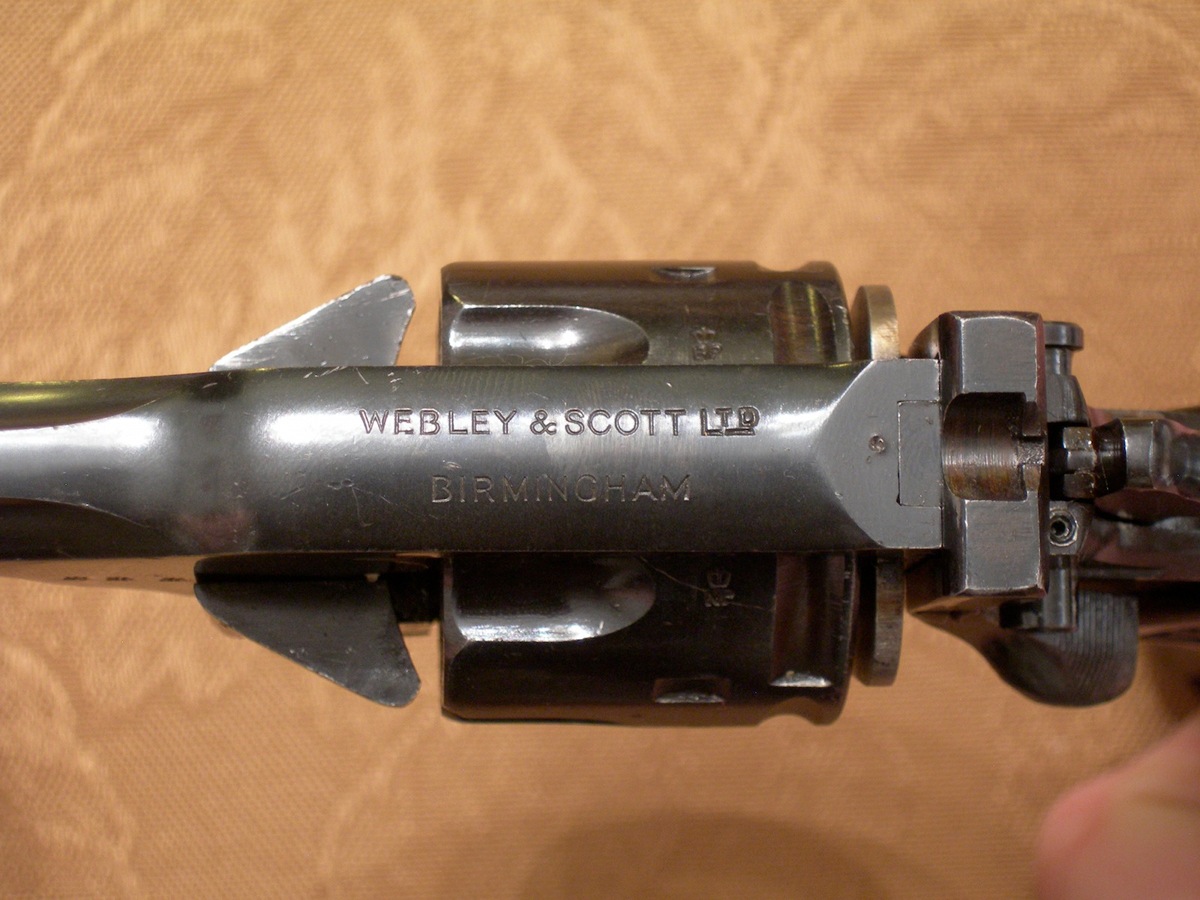
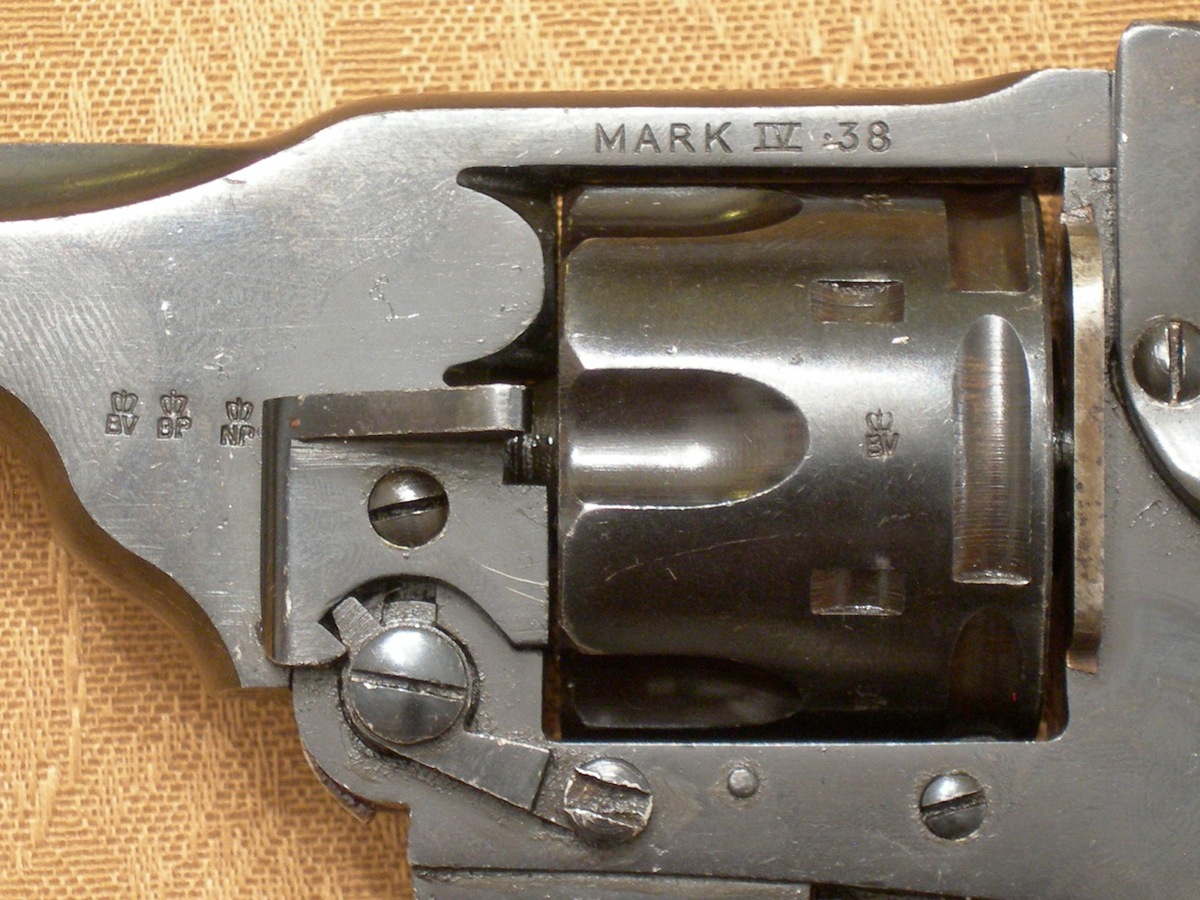
In the picture to the right, you can see the origin of this particular pistol in Birmingham, England. I had wondered whether Century got these Webleys from one of the commonwealth countries, but I haven’t noticed any marks indicating that would be the case. I’m pretty sure that this Webley was never issued to any Commonwealth authority. It seems difficult to believe that it was imported directly from England, since I would imagine their export laws for pistols would preclude that possibility. In the picture to your left, you can see the proofs I am speaking of (click on the picture to see up close). Apparently all guns sold in the UK had to be “proofed” by one of several proof houses. This was one proofed by the Birmingham Proof House. The BV is the “Birmingham View” proof, indicating that the pistol passed visual inspection. The BP proof is a black powder proof mark, and NP is the “nitro proof” mark for certifying it will accept smokeless cartridges.
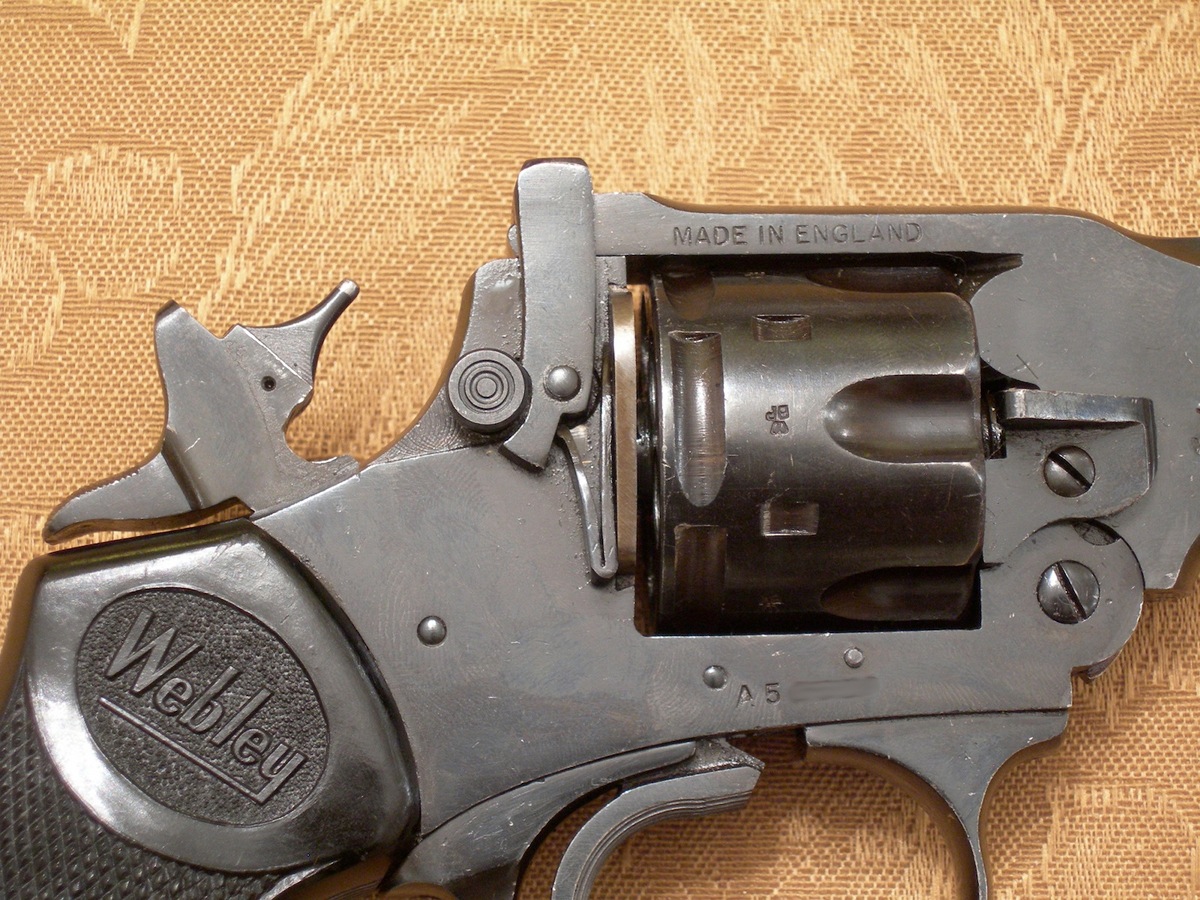
In the picture to the right, you can see up close how the Gun Control Act of 1968 forced Century International to butcher this pistol’s hammer. This would be a good collector piece otherwise. I didn’t even get a picture of the importer’s mark that was stamped on the underside of the barrel, something Bloomberg is demanding we make deeper and larger, in addition to adding a standardized extra serial number, further butchering imports and ruining them for collectors. You can see from the bit of serial number I didn’t Photoshop out, that it begins with A5, indicating a manufacture date of 1953. Had this pistol been imported into the United State prior to 1968, it would have been legal to import untouched, and an excellent collector piece. Thanks to our gun laws, it’s a shooter. I’m happy to finally have a Webley, and someday maybe I’ll spring for a collectable one. But for now I’m just happy to have something new to shoot.