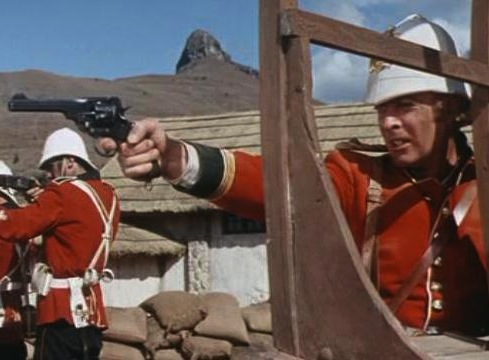
 Many of us, when we think of Webley revolvers, think of this iconic movie image, of Michael Caine and Stanley Baker playing Lieutenant Gonville Bromhead and Lieutenant John Chard in the 1964 movie Zulu, firing away with their Webley Mark VI in .455 Webley. Unfortunately for the movie, the iconic image is wrong. The revolver in question wasn’t introduced until World War I, thirty six years after the British Army fought the Battle of Rorke’s Drift. Nonetheless, the movie helped introduce more than a few people to the Webley, including me.
 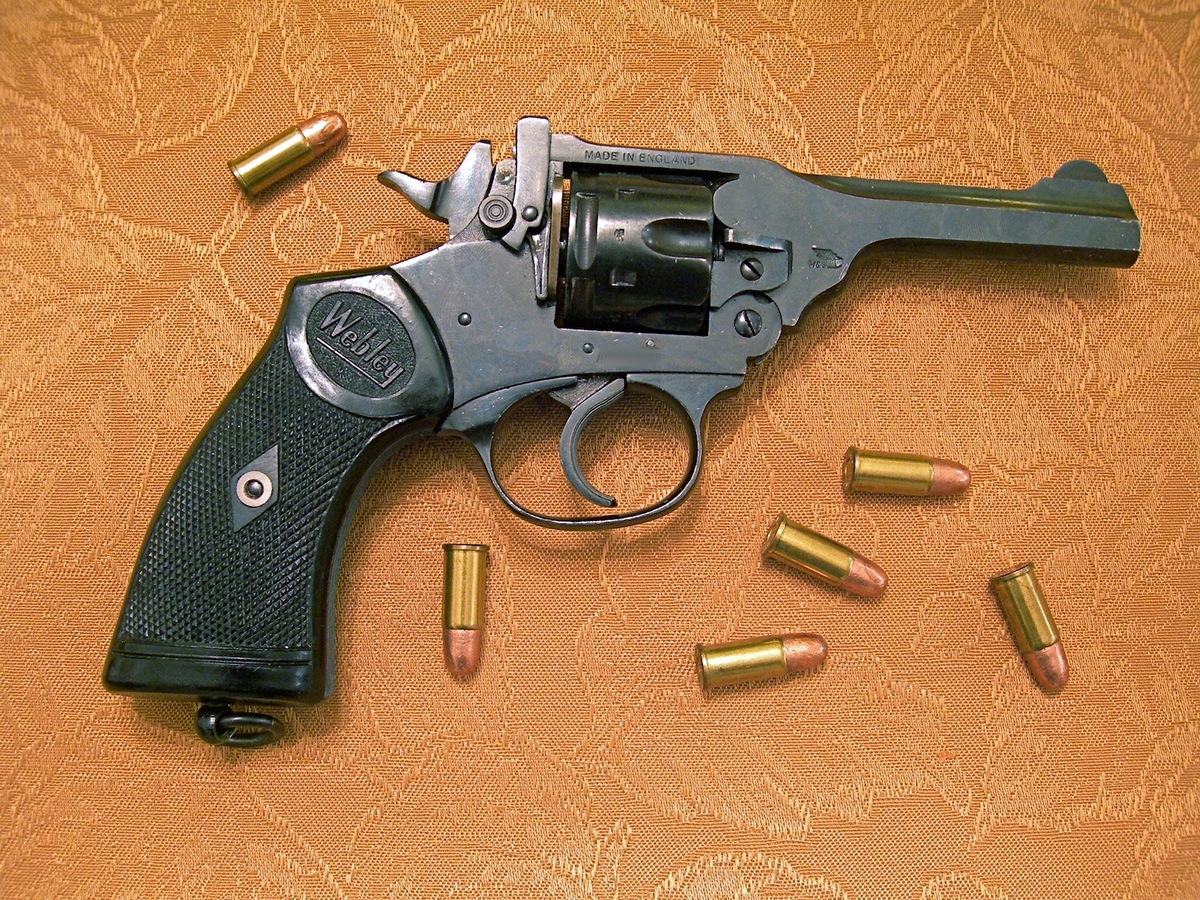 When I noticed Century was carrying some Webley Mark IVs in their catalog late last year, I decided to grab one, since I had just renewed my C&R FFL. Delivered to my door a few days later. These aren’t very collectible revolvers, which their low price reflects, but they are in good condition, and should be a solid shooter, and a good introduction to the gun. The pistols are in .38 S&W, which is an older, than the .38 Special, and definitely more anemic than the man stopping .455 Webley. Unlike the Smith & Wesson designs, the Webley uses a top break reloading mechanism, where the entire barrel and cylinder can be moved away from the frame. This requires two hands to accomplish, so
 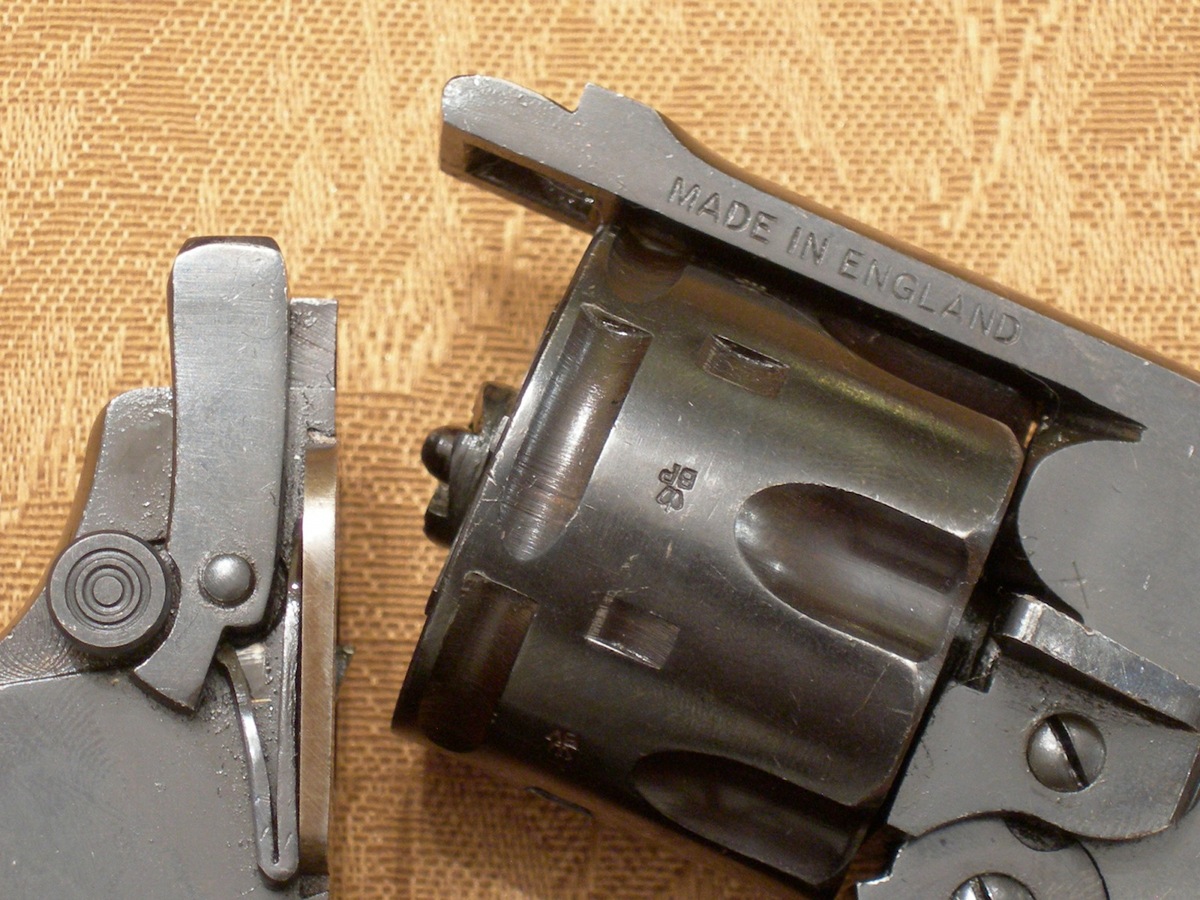 offers some obvious disadvantages to the more modern designs, but its’ still neat.
In the picture showing to the left, you can see the cross block safety that Century installed on these guns. That’s the main thing that kind of ruins these for collectors. Apparently it was done in order for Century to be able to import them under the ATF point system. Firearms explicitly listed on the C&R list can be imported by definition, without consideration to the point system (you can thank FOPA for that), but only the Webley Mark I is explicitly listed on the C&R list. These 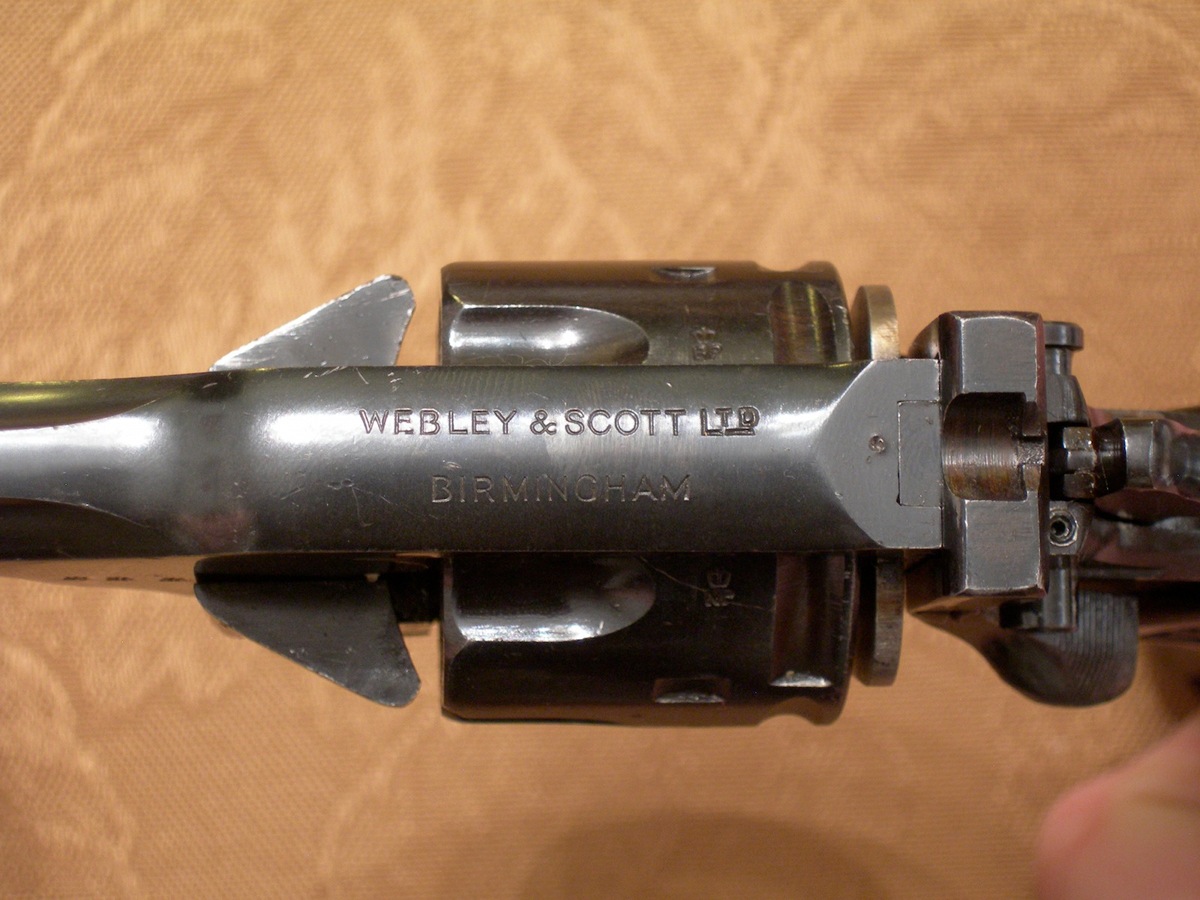 revolvers are C&R by virtue of the fact that they are older than fifty years. That gets it delivered to your door if you have a C&R FFL, but it doesn’t get you around the point system for importation.
In the picture to the right, you can see the origin of this particular pistol in Birmingham, England. I had wondered whether Century got these Webleys from one of the commonwealth countries, but I haven’t noticed any marks indicating that would be the case. I’m pretty sure that this Webley was never issued to any Commonwealth authority.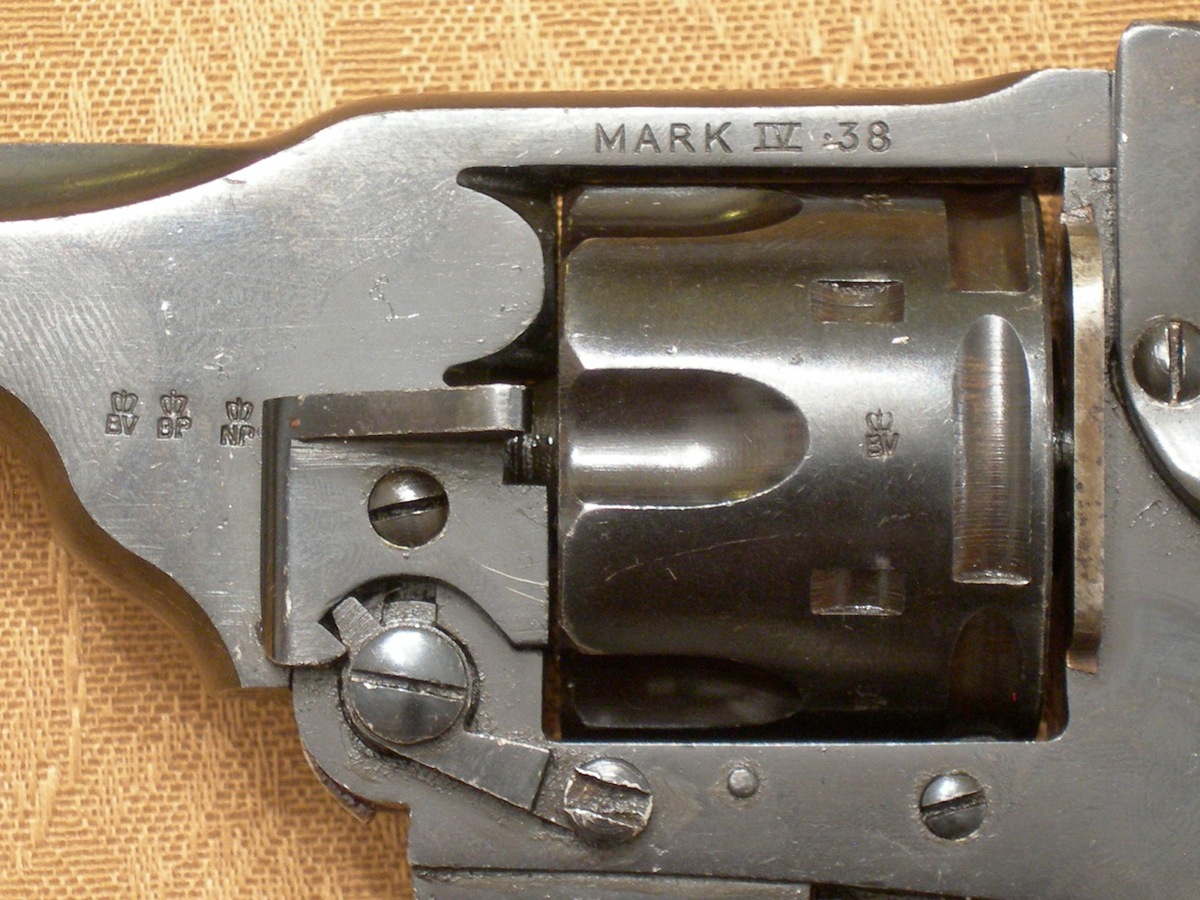 It seems difficult to believe that it was imported directly from England, since I would imagine their export laws for pistols would preclude that possibility. In the picture to your left, you can see the proofs I am speaking of (click on the picture to see up close). Apparently all guns sold in the UK had to be “proofed” by one of several proof houses. This was one proofed by the Birmingham Proof House. The BV is the “Birmingham View” proof, indicating that the pistol passed visual inspection. The BP proof is a black powder proof mark, and NP is the “nitro proof” mark for certifying it will accept smokeless cartridges.
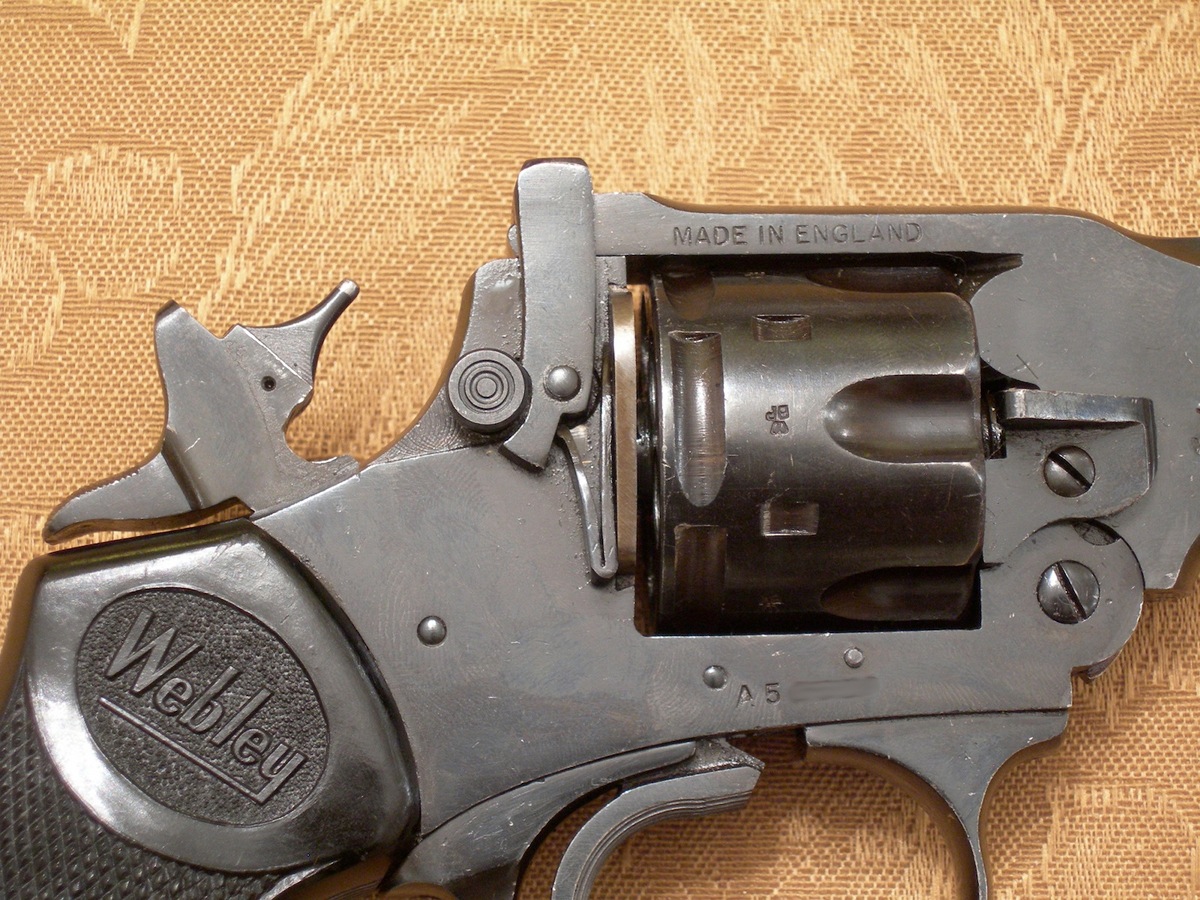
In the picture to the right, you can see up close how the Gun Control Act of 1968 forced Century International to butcher this pistol’s hammer. This would be a good collector piece otherwise. I didn’t even get a picture of the importer’s mark that was stamped on the underside of the barrel, something Bloomberg is demanding we make deeper and larger, in addition to adding a standardized extra serial number, further butchering imports and ruining them for collectors. You can see from the bit of serial number I didn’t Photoshop out, that it begins with A5, indicating a manufacture date of 1953. Had this pistol been imported into the United State prior to 1968, it would have been legal to import untouched, and an excellent collector piece. Thanks to our gun laws, it’s a shooter. I’m happy to finally have a Webley, and someday maybe I’ll spring for a collectable one. But for now I’m just happy to have something new to shoot.