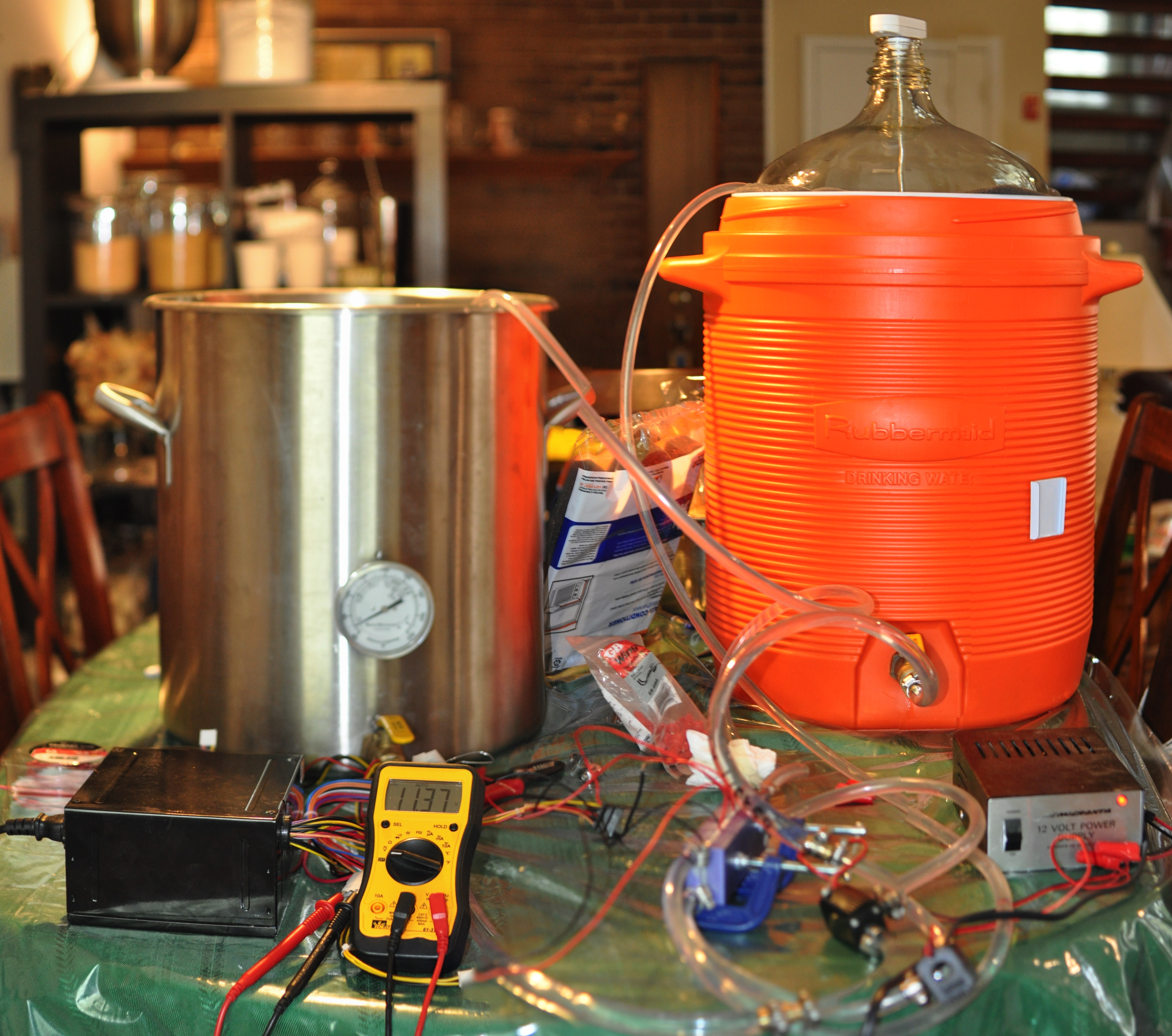

Gun news is pretty slow this week, and what news there is I’ll do in the weekly gun news later today. So today I will talk about my other hobby, namely home brewing. I make a batch of beer about every month, and always try to keep something on both of my taps. These days I rarely buy beer on the open market, and I’ve done enough brewing that some of my home brews can compare to some commercial offerings on the craft market (so I’m told). My next step is probably competition brewing, and seeing how my brews measure up. Not long ago I did a post about finding some mid-19th century squat bottles my 4x great-grandfather made. Since then, I’ve been doing research into 19th century brewing, to learn what ingredients might have gone into the “Brown Stout” that appeared on some of his bottles.
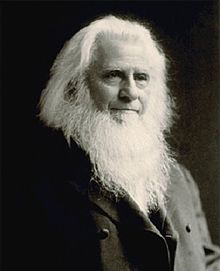
The best reference I found for 19th century brewing is in this book, written in the 1850s, “The Complete Practical Brewer.” The first thing that struck me is how much they actually knew about the science behind brewing, in the age before anyone fully understood the microorganisms at work in the process. Brewing in the 19th century is virtually no different than it is today, except for equipment. I found this passage on yeast from the book interesting, because it’s pretty clear they knew little about it:
Yeast is a frothy substance, of a brownish-gray colour and bitter taste, which is formed on the surface of ale or wine while fermenting. If it be put into sacks, the moisture gradually drops out, and the yeast remains be hind in a solid form. It has very much of the flavour and taste of cheese when in this state; but its colour is still darker. This dried yeast promotes or excites fermentation, but it does not answer quite so well as fresh yeast. From the resemblance which dried yeast has to cheese, we would be naturally inclined to infer that it is a species or variety of gluten. But if we attempt to induce fermentation in wort by adding the gluten of wheat, we will be unsuccessful.
After yeast is kept for some time in a cylindrical glass vessel, a white substance, not unlike curd, separates and swims on the surface. If this substance be removed, the yeast loses the property of exciting fermentation. This white substance possesses many of the properties of gluten, or vegetable fibrin, though it differs from it in others. Its colour is much whiter; it has not the same elasticity, and its particles do not adhere with the same force. In short, it agrees much more nearly, in its properties, with curd of milk, than with gluten of wheat.
Yeah, because when you skimmed the substance off the surface, you were actually skimming off the yeast colony. But they couldn’t have known that. Louis Pasteur wouldn’t publish “Physiological Theory of Fermentation” until 1879, nearly three decades after this book was written. But despite the lack of microbiology knowledge among brewers at the time, the book was a treasure trove, and helped me formulate a recipe. Brown Stouts were essentially strong porters (8-10% ABV), made with brown malt. During the French Revolution, supplies of brown malt were disrupted, so brewers switched to pale malts, and used adjuncts to try to reproduce that porter flavor. Various tricks were developed, including darkening sugar in an iron vessel, and then pounding it apart and throwing it in the boil. In the process of switching to pale malts, brewers of the time discovered pale malts were much more efficient than brown. After the introduction of “Black Patent” malt in 1817, brown malt was doomed, but it still was used through most of the 19th century. In the mid 1800s it was common to use one part brown malt to two parts pale malt, so that’s what I went with.
Licorice root was commonly used in the boil, so I used a little star anise. Instead of scorched sugar, I used Belgian dark Candi Sugar. I added some Carafoam to help with body. Brown Stouts were ridiculously hoppy. I was afraid to go quite as far as they would have. At the time, brewers were still using a lot of imported British hops, so I used 3oz of American Cluster hops as the bittering hops, 1oz Brewer’s Gold at 30 mins, and finished with 1oz British Kent Goldings.
If you were ever try to reproduce an ale like this, be warned that while I was prepared for Brown Malt to be less efficient than pale, it was really less efficient. I used 10lb. of Maris Otter and 5lb. of Thomas Fawcett Brown Malt, thinking that would be plenty to get me to my goal. If I had to do it over again, I would use 12lb. of Maris Otter and 6lb. of Thomas Fawcett. That is a “Yuge” ale, to channel The Donald. I had to make up the shortfall by using the whole pound of Candi Sugar, and throwing in 3/4lb. of dry malt extract (DME) into the boil.
From the book, it looks like mid-19th century brewers didn’t pitch very much yeast into their worts. This would affect the flavors the yeast will give off. Some of these would be considered off flavors today. I was reluctant to do this, so I did a full pitch of an American Ale yeast with a starter. I did allow the fermenter to rise to about 72 degrees to give it a bit more of the flavor it probably would have had at the time.
The end result is still fermenting, but I’m hoping it turns out.